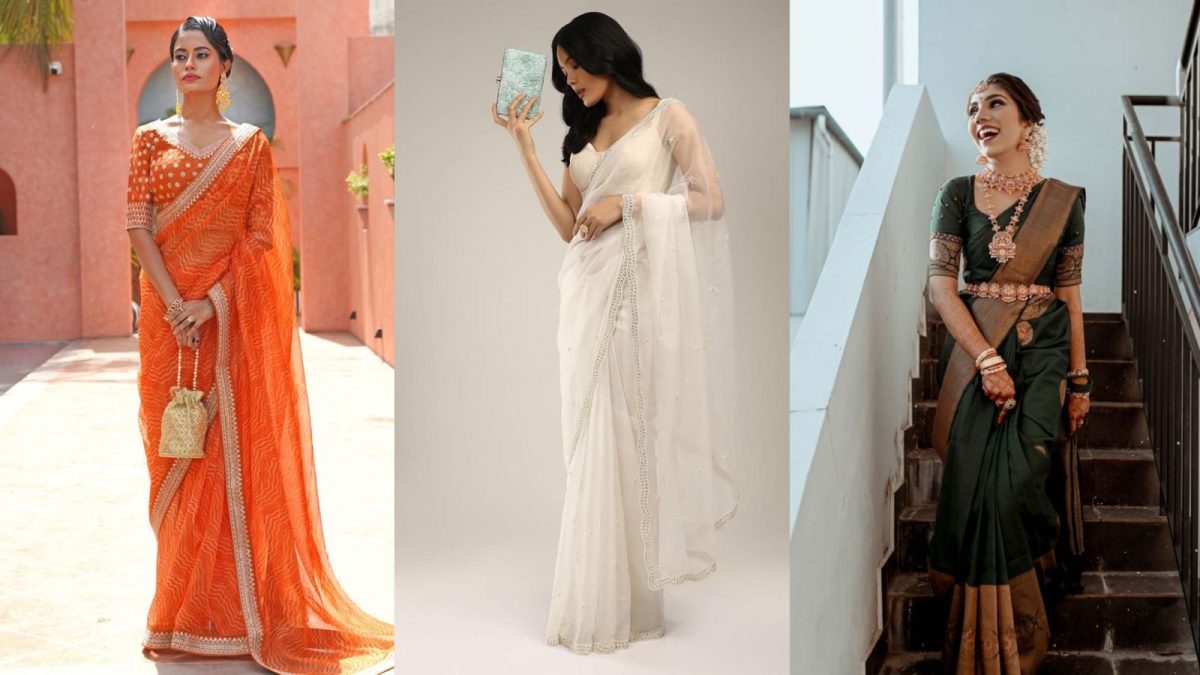
The saree, an embodiment of grace and tradition, is a quintessential part of Indian culture that resonates deeply with women across the nation. Beyond its aesthetic allure, the saree carries profound cultural and symbolic significance, often reflecting the wearer’s heritage, values, and beliefs. In recent times, an enchanting trend has taken the world of bridal fashion by storm: the incorporation of the tricolor inspired by India’s national flag into the design of bridal sarees. This innovative trend not only pays homage to the essence of the nation’s identity but also infuses weddings with a profound sense of patriotic pride and unity. Let’s embark on an enlightening journey through the realm of “Saree Stories,” unveiling the symbolism of the tricolor in bridal attire and delving into the diverse interpretations it adds to the sanctity of the matrimonial celebration.
1. A Tapestry of Heritage and Patriotism: Unveiling the Symbolism of the Tricolor in Bridal Attire

The tricolor of India, with its vibrant saffron, pure white, and lush green shades, symbolizes the nation’s diversity and unity. When these colors are intricately woven into bridal sarees, they form an exquisite tapestry that weaves together the threads of tradition, culture, and patriotism.
Saffron: Emanating Courage and Strength
The saffron hue, reminiscent of the sun’s radiant energy, embodies courage, sacrifice, and strength. When interwoven into a bridal saree, saffron infuses the ensemble with a sense of boldness and determination. Brides who choose saffron-inspired sarees radiate the spirit of fearlessness and resilience, symbolizing their readiness to embark on the remarkable journey of marriage.
White: A Canvas of Purity and Serenity
The color white epitomizes purity of intention and serenity of heart. When a white saree is adorned with delicate tricolor embellishments, it encapsulates the sanctity of the wedding ceremony and the untainted love shared by the couple. It acts as a canvas on which the bride’s aspirations for a peaceful and harmonious married life are elegantly painted.
Green: Symbolizing Growth and Fertility
The verdant green hue, reminiscent of India’s lush landscapes, signifies growth, fertility, and vitality. When incorporated into a bridal saree, green embodies the blossoming of a new chapter in the bride’s life – the growth of her love, her family, and her role as a partner.
2. Crafting the Tricolor Saree

The creation of a tricolor bridal saree is an artistry-driven endeavor that demands meticulous attention to detail and an innate understanding of the symbolism behind each shade. Accomplished artisans and designers channel their creativity and skill to ensure that the tricolor theme is seamlessly integrated into the saree’s design.
Intricate Embroidery and Embellishments
Intricate embroidery techniques breathe life into the tricolor palette. Saffron-hued motifs depict bravery and strength, white embellishments evoke purity, and green accents embody growth. These designs pay homage to the profound significance of the tricolor.
Thoughtful Fabric Selection
The choice of fabric plays a pivotal role in capturing the essence of the tricolor. Luxurious silks, diaphanous chiffons, and opulent velvets provide a canvas for the colors to radiate. The interplay of textures adds depth and dimension to the saree, elevating its visual appeal.
Exploring Draping Styles

The draping style of the saree contributes to the overall aesthetic of the ensemble. Brides can opt for traditional draping methods that accentuate the tricolor borders or experiment with contemporary styles that infuse modernity while upholding tradition.
Harmonizing with Thoughtful Accessories

A thoughtful selection of accessories complements the tricolor saree, enabling brides to amplify the symbolism of each hue. Delicate gold jewelry, saffron-toned bangles, and emerald-green accents harmonize with the ensemble, creating a seamless synergy between the saree and its accessories.
Borders and Fabric Materials
In addition to the colors themselves, the choice of borders and fabric materials further accentuates the tricolor theme, enriching the symbolism behind each hue. Borders play a pivotal role in saree design, and tricolor borders eloquently narrate the story of unity and diversity. Saffron, white, and green borders intertwine seamlessly, representing the harmonious coexistence of different elements in both the saree and the nation.
3. Sarees of Distinction: Symbolism Beyond Color

While the tricolor palette undeniably symbolizes unity and patriotism, the choice of saree type can further elevate the celebration. Let’s delve into a few distinct saree types that harmoniously intertwine with the tricolor theme.
Silk Sarees
Silk sarees, adorned with tricolor borders and motifs, seamlessly blend tradition and elegance. These sarees pay homage to India’s rich heritage and are often associated with grace and opulence. Brides draped in silk sarees exhibit a timeless elegance that mirrors the nation’s enduring cultural legacy.
Khadi Sarees
Khadi sarees, hand-spun and symbolic of Mahatma Gandhi’s ideals of self-sufficiency and unity, offer a unique way to incorporate the tricolor theme. The choice of khadi sarees reflects a commitment to the principles of independence and resilience, mirroring the spirit of the nation’s freedom fighters.
Kathiawadi Sarees
Kathiawadi silk sarees, renowned for their vibrant colors and intricate motifs, serve as a delightful canvas for the tricolor theme. These sarees, originating from the Kathiawar region of Gujarat, embody the essence of unity in their exuberant fusion of hues and patterns.
Banarasi Sarees
Banarasi sarees, with their luxurious brocade work and intricate designs, celebrate the rich tapestry of Indian culture. When adorned with tricolor elements, these sarees become a magnificent expression of heritage and sophistication, making them an ideal choice for brides who cherish tradition.
Kanjivaram Sarees
Kanjivaram sarees, renowned for their exquisite craftsmanship and intricate designs, offer a canvas for the tricolor theme. These sarees, woven with intricate motifs and rich color contrasts, encapsulate the essence of India’s cultural diversity and artistic brilliance.
Kathiphera Silk Sarees
Kathiphera silk sarees, a true gem of Odisha’s handloom artistry, embody the essence of Indian heritage. The name itself, “Kathiphera,” alludes to the stick-like motifs along the border, offering a distinct and timeless charm. Crafted from exquisite mulberry silk, these sarees boast a glossy texture.
What makes them perfect for Indian brides are the tricolor patterns gracefully interwoven into the pallu and border, an homage to unity and diversity. The bold tricolor border adds an elegant touch, symbolizing the rich cultural tapestry of the nation. Choosing a Kathiphera silk saree means embracing tradition and heritage, as each motif and hue becomes a reflection of India’s vibrant legacy. For brides, draping this saree is more than attire; it’s an embrace of their roots and an affirmation of unity, making their wedding day an ode to Indian diversity.
As we delve into the intricacies of tricolor sarees, we celebrate not only the amalgamation of colors but also the fusion of cultures, traditions, and stories. Each tricolor saree becomes a symbol of unity that transcends boundaries, reflecting the shared aspirations and dreams of a nation and a couple united in love. So, as brides don the tricolor saree, they embark on a journey that intertwines their personal narratives with the tapestry of India’s history, embodying the ideals of unity and patriotism with every graceful step they take.
Also, read
Independence Day Outfit Ideas That You Cannot Miss!
The Impact Of Patriotic Music On Event Atmosphere
Planning The Perfect Independence Day Party: Tips And Venue Ideas