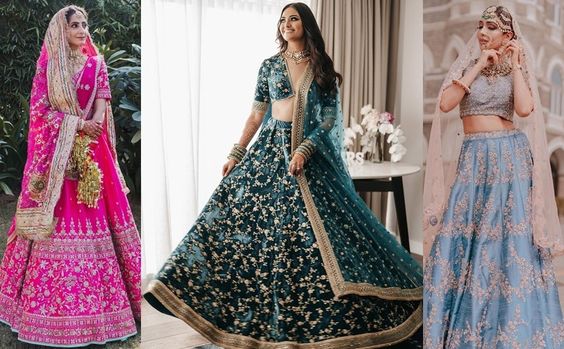
Every bride wishes to look stunningly gorgeous on her wedding day. Every detail, from the ideal gown to the gorgeous accessories, contributes to her bridal look. The dupatta is one such item that may give a touch of elegance and charm to a bride’s attire. The dupatta, a long scarf or veil, is generally worn over the lehenga, a traditional Indian bridal garment.
In this blog, we will look at different styles of dupatta on lehenga techniques every bride should try to complement her bridal gown.

Different styles of dupatta on a lehenga
1. Classic Over-the-Head Draping
The traditional over-the-head dupatta draping method is a classic choice that emanates elegance and grace. The bride wears the dupatta over her head, letting it fall over her shoulders and back. It frames the face well and draws attention to the delicate embroidery on the lehenga. Brides may improve the style by pinning the dupatta to one side of the waist, producing a soft drape emphasizing their waistline.


2. Single Shoulder Draping
The single-shoulder draping technique is a fantastic alternative for women who wish to add a modern touch to their bridal gown. The dupatta is draped over one shoulder, letting it fall diagonally across the body. It gives a lovely asymmetrical effect that highlights the delicate intricacies of the dupatta and lehenga. Brides may make this look completely distinctive by experimenting with different pleating techniques and accessories.


3. Half Saree Dupatta Draping
The half-saree dupatta draping is a cultural fusion that generates a spectacular aesthetic impact. The classic saree draping style inspires it. This method entails pleating and draping the dupatta over one shoulder, much like a saree pallu. The dupatta is then wrapped around the waist and tied, creating the appearance of a half-saree. This outfit allows brides to show off the intricate details of their lehenga while also adding aspects of traditional Indian sarees.


4. Veil-Inspired Draping
Brides might choose a veil-inspired draping design to generate a feeling of enchantment, romance, and mystery. The dupatta is draped over the head and falls lightly over the face, partially obscuring it. The dupatta can be tied behind the head or pinned to the side, depending on the bride’s taste. This look adds an ethereal touch to the bridal gown and gives it a mesmerizing air.


5. Dupatta as a Cape
Draping the dupatta as a cape is a wonderful alternative for brides who want a dramatic and fashion-forward style. This look entails fastening the dupatta at the shoulders and allowing it to flow down the arms, giving a cape impression. It elevates the entire appearance and helps the bride show off the intricate details of her lehenga while making a striking fashion statement.

The Belted Dupatta style combines classic and modern elements to create a contemporary design. The dupatta is draped over the shoulders and fastened with a fashionable belt around the waist. This look emphasizes the bride’s curves and adds a touch of glitz to the ensemble. Brides can coordinate their lehengas with belts decorated with stones, pearls, or embroidery.

The dupatta is an elegant item that complements a bride’s lehenga attire. Several methods exist to experiment with dupatta draping and create a distinctive bridal appearance, ranging from the conventional over-the-head draping to the dramatic cape style. Whether women choose a classic or modern appearance, these designs provide many alternatives to complement their bridal gown. Brides may create distinctive and enchanting wedding ensembles on their special day by integrating these enticing different dupatta styles on lehenga ideas.
Read More
40+ Latest Mehndi Designs For 2023 Brides That You Must Save!
30+ Stunning Bridal Mehndi Designs to Elevate Your Wedding Look!