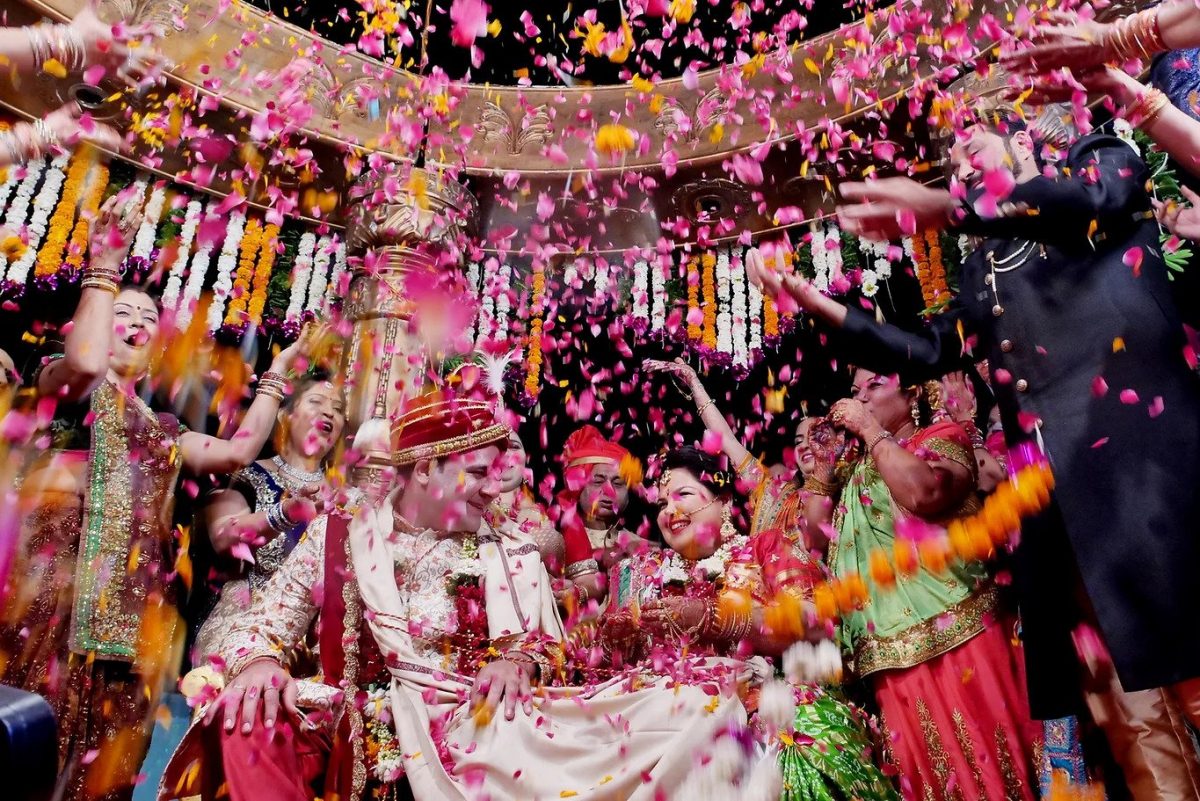
Weddings in India hold an emotional importance. These lavish occasions are distinguished from other ceremonies by their glamour and overall richness. Traditions and bridal trousseau styles also differ from area to region in our large nation. Our people have varied cultures, languages, and faiths.
A Bengali bride walks elegantly dressed up in gold Kaan and bangles of white ivory and red coral that are adorned with gold. A Punjabi bride on the other hand wears Chura. The gold filigree wrist adornment band or Kada is an essential component of a Kashmiri bride’s trousseau. And Rajasthani brides must have their traditional Kundan jewellery as part of their bridal dress. The diversity is what really makes Indian weddings such lavish and vibrant events.
Most Indian ceremonies begin with exchanging rings and gifts between families. A healthy beginning of the new relationship. Followed by similar pre-wedding, weddings and post-wedding rituals. But let’s look at the unique set of customs in each community.
J&K WEDDINGS
J&K weddings are outrightly so beautiful and pious, their ceremonies such as the exchange of nutmeg between the fathers of the bride and the groom represents their acceptance of the union and their desire for it to be long-lasting. To announce the entrance of the groom into the house, conches are blown. The bride’s outfit is the most intriguing aspect of a Kashmiri wedding. The bride is dressed in a woollen choli and lehenga skirt.


PUNJABI WEDDINGS
In Punjab, Sikh weddings are the most well-known wedding style. In the daytime, a Gurdwara hosts a Sikh wedding. Though Punjabi wedding rituals are straightforward, it is popular for massive parties. Reht Maryada, expressly forbids the groom’s family from receiving any dowry from the bride’s family.

BENGALI WEDDINGS


A Bengali wedding must be attended at least once in a person’s lifetime. The groom and bride make the customary eye contact as the bride comes on a stool raised by her brothers.
The traditional Banarasi saree worn by a Bengali bride is often red or green, and the groom wears off-white clothing. The bride is carried by her brothers on a pidi, a small wooden stool to the mandap to begin the Bengali wedding rites. She is led in seven rounds around the groom while a betel leaf is used to conceal her face. The bride and groom then slowly remove the betel leaf from their faces and look at each other for the first time on their wedding day. A truly precious moment!
ASSAMESE WEDDINGS


In Assamese, the wedding ceremony is referred to as Biya. An Assam wedding includes pre- and post-wedding rituals, just like all significant traditional Hindu weddings. The Juran, Tel Diya custom, Pani tola, and Nuani ceremonies make up the pre-wedding traditions.
The bride’s mother visits the groom during the Juran ceremony. The groom’s mother applies sindoor and presents a Mekhla Chadar, a traditional Assamese attire, during the Tel Diya ritual.
The groom dons a dhoti, kurta, and silk scarf for the wedding. The conch shell blowing adds a spiritual element to the wedding ceremony.
GUJARATI WEDDINGS

In Gujarati wedding rituals, the couple only performs four pheras around the sacred fire during the ceremony. The four pheras are Dharma, Artha, Kama, and Moksha. They are the four goals of human life that each represent. The groom visiting his future mother-in-law to seek her blessing is the most well-known Gujarati wedding custom.
MARATHI WEDDINGS

Marathi weddings are always held during the day because Marathi people believe that daytime is the luckiest period.
The first pre-wedding ritual is the engagement, or Sakhar Puda in Marathi, which starts days before the wedding. Beginning with a puja for Lord Ganesh, the wedding day rituals are performed in order to ensure that everything goes according to plan and with the god’s blessings. People still adhere to these Marathi wedding rituals for centuries now.
GOAN WEDDINGS

Goa is known for its Christian weddings because the majority of the inhabitants there are Christians. The ideal locations for weddings are found in the state with several beaches. The bride typically dons a long gown and veil, and the groom steals the spotlight with a tuxedo. Christian weddings’ most significant ceremony is the bride and her parents walking down the aisle (most commonly her father).
TAMIL WEDDINGS
There are several entertaining Tamil wedding rituals performed before, during, and after. The haldi ceremony, sangeet, followed by Panda Kaal Muhurtham, and Agni Satchi are among the main ceremonies. The groom dons a dhoti, while the bride dons a Koorai saree, which is customarily crimson in colour.

MALAYALI WEDDINGS

Malayali weddings begin at dawn time. Given the favourable climate in this area, monsoon weddings are particularly well-known.
Hindu, Nair, Christian, and Muslim wedding customs are all classified into categories, and each of these customs shares some roots with conventional Keralan culture.
Kerala is renowned for having the best blend of conventional and non-conventional.
Indians as we know can find celebration in every little thing and weddings being one of the most celebrated events here cannot go without any grand celebration. Indian weddings are colourful, meticulously prepared, culturally rich celebrations brimming with joy and custom. While the physical, spiritual, and emotional union of the couple is the fundamental component of a wedding ceremony, each Indian state and culture has varied rituals and customs that bring the whole event together. This article brings forward the blend of different rituals and mini ceremonies of each Indian state or community.
Also Read –
35+ Latest Bridal Lehenga Designs’ Colour Combinations For This Wedding Season!
Indian Wedding Trends 2022 – A Recap And Inspiration Guide For All Wedding Seasons