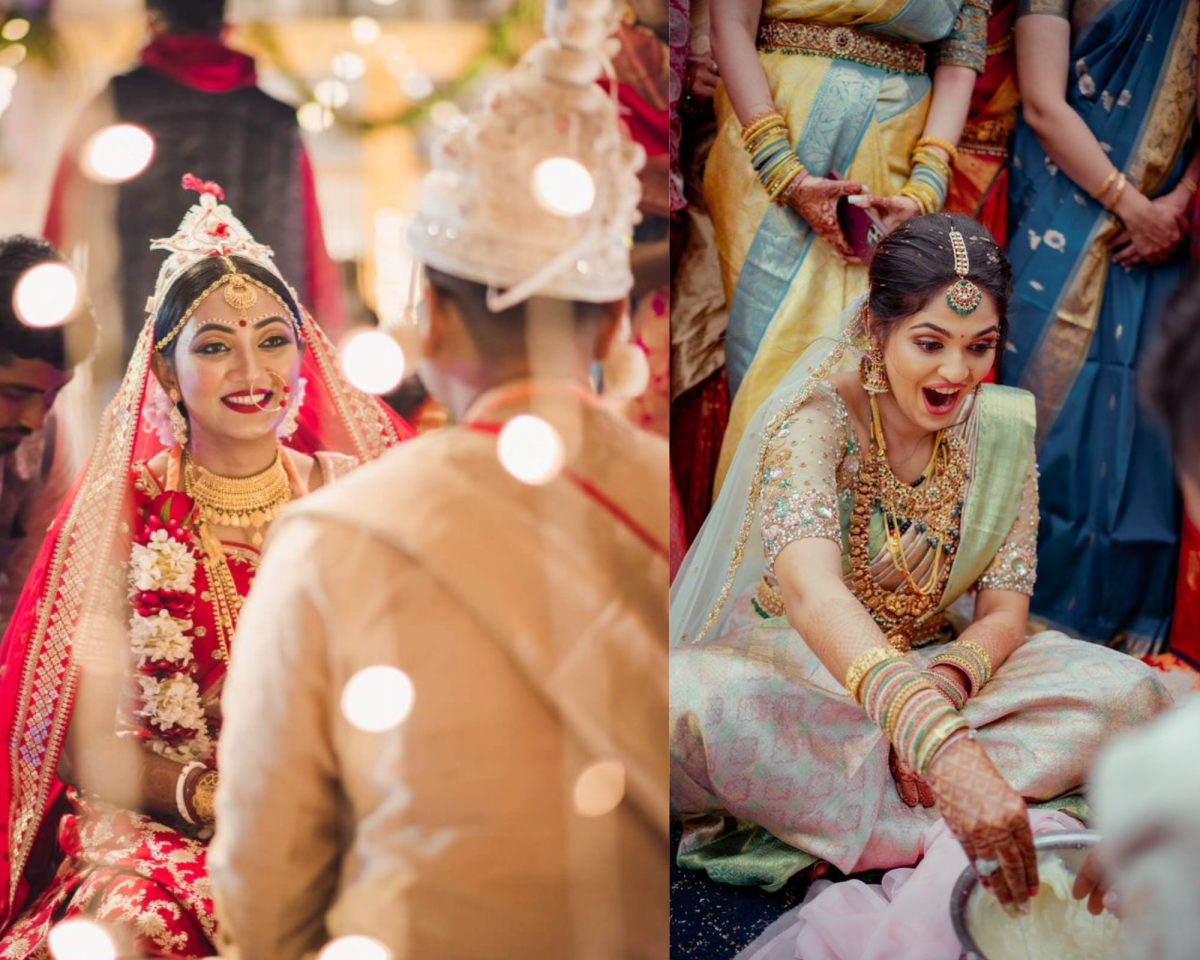
We’ve seen traditions and then we have seen bizarre traditions and Indian weddings are an epitome of it! From Kashmir to Kanyakumari, weddings in India are infused with different cultural infusions that nowhere adheres to sanity.

Photo via – Pinterest

The fun, the enthusiasm, the sense of adrenaline rush that weddings in India bring cannot be further stated without giving some exciting examples of traditions followed in different states of India. Have a read –
Kashmiri Wedding
A Kashmiri wedding has a unique tradition that would elate you. After the wedding is solemnised a kashmiri bride has to wear seven different colours on seven different days. During the duration of these post-wedding seven days, the bride is exempted from any household chores. On the seventh day the bride’s parents are invited to the groom’s place for dinner. In a kashmiri wedding tradition this day is known as Satim Doh. The bride then departs with her parents to spend a few days at their house.
Bengali Wedding
The coastal state of West Bengal has some of the most unique wedding traditions. In any Bengali wedding, the mother of the bride and the groom are not allowed to attend their daughter and son’s wedding. There are many reasons to justify this tradition. One of these talks about the hard work that mother’s do throughout their lives and dedication they put in, to raise their children. Therefore this is the day they should be given complete rest and kept away from the hustle and bustle of weddings. Another reason that people associated with this tradition mentions states that the presence of mothers in a wedding is an ill omen and it would bring bad luck to the bride and the groom.
Apart from this, the bridal entry in a Bengali wedding is also distinct. This tradition is known as Saanth Paak. The bride is made to sit on a “Piri” and the piri is lifted by her brothers and the bride sitting on the piri is made to take 7 rounds around the groom. After the ritual of Saanth Paak is completed, the bride removes the betel leaves with which she has been covering her face all this while and this is the first time when an eye contact is established between the bride and the groom during their wedding.
Rajasthani Wedding
Rajasthani weddings also consist of lively rituals like any other Indian wedding. But a few localised customs and traditions sets this apart. Unlike any other Indian wedding, there is “Ganpati Sthapana” in a Rajasthani wedding. Apart from this a special evening programme is organised for the ladies attending the wedding. This programme is known as Mehfil. Famous Rajasthani dance Ghoomar is organised for the ladies and a special seating arrangement is made for the bride. The male members are not allowed to attend this event and they have parallel celebrations going on, but the groom can enter the ladies’ Mehfil without any restriction.
Andhra Weddings
Telugu weddings are generally solemnised during mornings. They have a ritual which is really interesting and at the same time connects the south to the north of India. The ritual is known as Kashi Yatra. In this ritual the groom pretends to take Sanyas and travel to Kashi which is popularly known as Banaras. Brother of the bride has the responsibility of convincing the groom to marry his sister. At the Jeerakasala-Bellamy rite, which is performed in the wedding Mandap, the bride and groom apply a paste made of cumin or jeera seeds on each other’s hands from behind a curtain. This ritual suggests that the couple’s relationship will remain forever.
Weddings In Tamil Nadu
On the wedding day Tamilian Brahmin households engage in Kasi Yatra, a custom resembling Andhra weddings. The pretends to have changed his mind and is going to take a sanyaas as he is about to enter the wedding Mandap. Only a slight tweak in this case is that the bride’s father instead of her brother convinces him to continue and start a family.
Bihari Weddings
Bihari weddings are no less when it comes to a feature that differentiates it with weddings from different parts of India. The bride carries an earthen pot and this is done in order to check her strength. The numbers of pots are steadily increased to see how many pots she can balance at the same time.
UP Weddings
Tel Baan is the name given to the haldi ritual in various cultures, such as Uttar Pradesh. From Lagan till the wedding day, female members exclusively do Tel Baan, which entails applying a combination of mehendi, haldi, mehendi, and mustard oil to the body of the bride or groom using a few strands of grass. They then take a bath to represent the mental and emotional purification.
Assamese Weddings
In order to make it difficult for the groom to access the location, the guest and groom in Assam are showered with a lot of rice as they approach the venue entrance. The groom’s companions must pay shagun to access the location while holding an umbrella over him for protection. The bride’s mother then performs an aarti.
Take a look at these too –
https://www.venuemonk.com/blog/platinum-bands-for-grooms-and-brides-to-be
https://www.venuemonk.com/blog/7-wedding-budget-myths-debunk-asap